

Donate

Donate Tree or Seeds or E-waste
Our Company Address
Green Future Foundation
123 Nature Avenue,
Eco City, Green State 123456,
India
Email: contact@greenfuture.org
Phone: +91 9876543210
Solar Surge in Rural India: What's Powering the Boom?
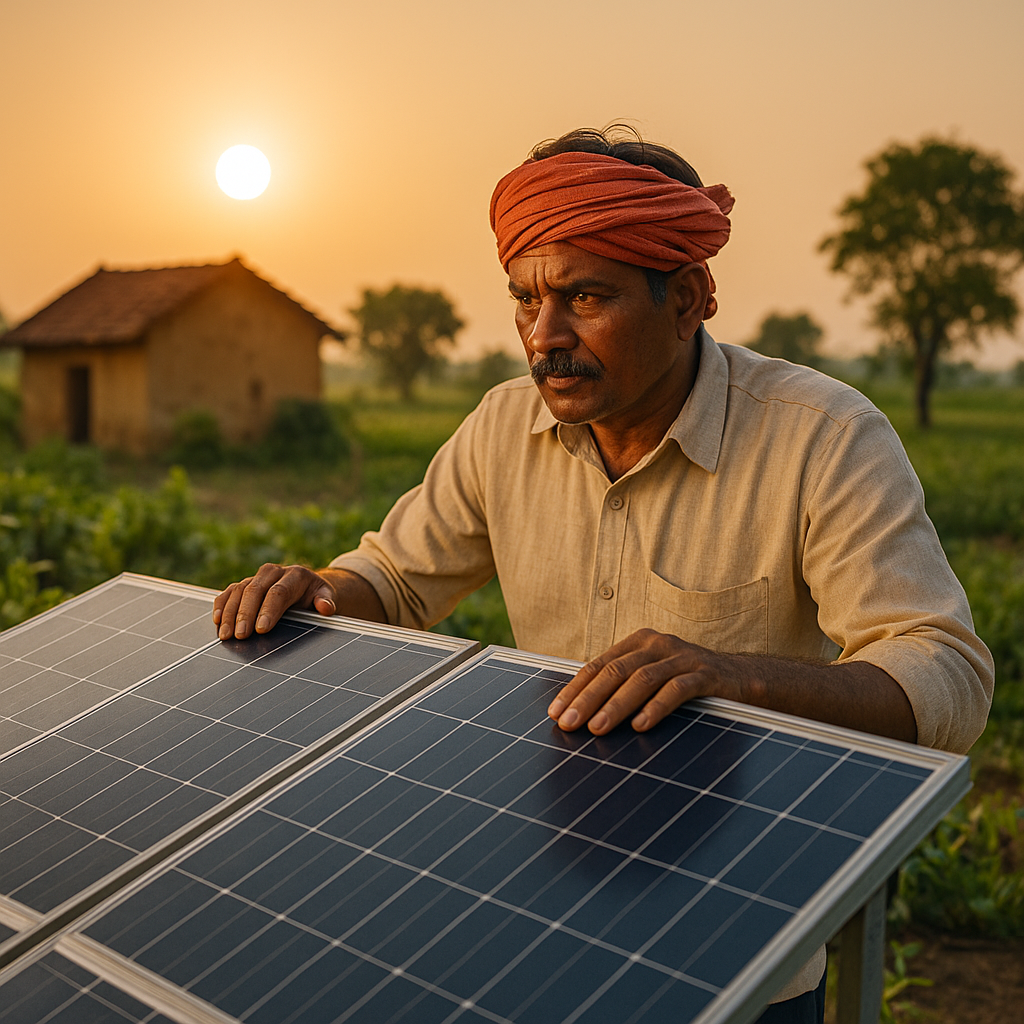
Solar Surge in Rural India: What's Powering the Boom?
Introduction
India’s rural transformation is undergoing a silent but powerful revolution, and the engine behind it is solar energy. With more than 65% of the country’s population living in rural areas, the demand for reliable and affordable electricity has never been more critical. While the national grid has made significant strides in electrification, millions still lack dependable and quality power. Enter solar energy: a decentralized, clean, and sustainable solution that is lighting up villages, powering farms, and enabling micro-enterprises across the country.
This blog explores the current landscape of rural solar electrification, unpacks the drivers behind this solar surge, examines on-ground case studies, and anticipates what lies ahead for solar in India's hinterlands.
The Current Landscape of Rural Electrification
In 2018, the Government of India declared that all villages had been electrified. However, this milestone, defined as just 10% of households in a village having power and basic infrastructure in place, falls short of ensuring reliable electricity access. While the grid has reached most areas, consistent electricity, especially in evenings and during peak load periods, remains a dream for many.
Rural India has long grappled with erratic supply, voltage fluctuations, and blackouts. For agriculture-based economies, where electricity is needed to pump water, run mills, or store perishable produce, this inconsistency affects productivity and incomes.
Decentralized Renewable Energy (DRE), particularly solar, offers an effective remedy. Solar solutions—from rooftop panels to solar pumps to mini-grids—are rapidly filling the gaps, providing clean and predictable energy at the doorstep of rural households and enterprises.
What’s Driving the Solar Boom in Rural India?
A. Government Policies & Subsidies
The Indian government has aggressively promoted solar energy through various schemes:
PM-KUSUM (Pradhan Mantri Kisan Urja Suraksha evam Utthaan Mahabhiyan): Launched in 2019, this scheme aims to install 30.8 GW of solar capacity by supporting farmers with solar-powered irrigation pumps. It significantly reduces reliance on diesel pumps and grid-based power.
Saubhagya Scheme: Focused on household electrification, this initiative has helped extend the grid and incentivized off-grid solar solutions for remote regions.
State Schemes: Maharashtra, Rajasthan, Uttar Pradesh, and Tamil Nadu offer subsidies and incentives for solar pumps, microgrids, and rooftop solar installations.
These programs, backed by capital subsidies and financial incentives, have created a favorable policy environment for solar expansion in rural areas.
B. Declining Solar Panel Costs
Between 2010 and 2025, the cost of solar photovoltaic (PV) modules has fallen by over 80%. Economies of scale, better manufacturing processes, and global competition have made solar systems more affordable than ever. This cost decline has been a game-changer for small farmers and households.
With falling hardware costs and increased competition among service providers, the average cost of installing a small solar unit has become financially viable, especially when coupled with subsidies or credit options.
C. Innovation in Solar Technologies
Innovations are making solar more effective and adaptable to rural needs:
Solar Water Pumps: Replacing diesel-run pumps with solar-powered versions is helping farmers save on fuel and reduce carbon emissions.
Solar Mini-Grids: These community-owned and managed grids serve clusters of homes or enterprises with reliable power.
Solar Cold Storage: Small-scale, solar-powered storage units are allowing farmers to store perishable produce without depending on diesel generators.
India has also seen the rise of smart solar systems with IoT integration, enabling remote monitoring, fault detection, and energy management—enhancing system reliability in rural settings.
Case Studies: Solar Success Stories in Rural India
1. Rajasthan: Harnessing the Sun for Agriculture
In Rajasthan’s Barmer district, hundreds of farmers have adopted solar water pumps under PM-KUSUM. With long daylight hours and high solar insolation, solar pumps have significantly improved irrigation reliability. Farmers report increased crop yields, reduced diesel costs, and more time for other economic activities.
2. Jharkhand: Tribal Villages Powered by Mini-Grids
In Jharkhand’s Gumla district, a 50 kW solar mini-grid now powers more than 120 households, schools, and small shops. The grid, managed by a local NGO in partnership with a private developer, has reduced kerosene dependency and enabled children to study after dark.
3. Maharashtra: Solar Cold Storage for Perishable Crops
In Nashik, grape farmers are using solar-powered cold storage units to preserve their harvest and fetch better prices. Previously, produce would often spoil due to lack of storage or unreliable grid power. The result: lower wastage, higher incomes.
4. Assam: Women-Led Solar Cooperatives
In Assam’s Majuli Island, women’s self-help groups are managing solar kiosks that provide mobile charging, fan services, and lighting. The cooperatives generate income for women, empower them financially, and ensure community-led maintenance.
Social Impact: Empowering Communities
Solar energy is reshaping the socio-economic fabric of rural India:
Women Empowerment: Solar-run mills and microenterprises are reducing manual labor, freeing women’s time, and creating income sources.
Health and Education: Solar-powered lights and fans in schools and clinics are improving educational outcomes and healthcare delivery.
Livelihood Generation: Training rural youth as solar technicians and entrepreneurs is creating green jobs and reducing urban migration.
Energy Independence: Decentralized systems give communities control over their power supply, reducing dependence on unreliable grid infrastructure.
Challenges on the Horizon
Despite its promise, the rural solar movement faces several hurdles:
Financing Barriers: Upfront costs, even when subsidized, can be high for marginal farmers and low-income households.
Maintenance Issues: Remote locations often lack skilled technicians, leading to poorly maintained systems.
Seasonal Performance: Solar output varies with weather and seasons, requiring smart hybrid solutions.
Lack of Awareness: Many potential users are unaware of solar options or wary due to previous bad experiences.
Future of Solar in Rural India
The next decade promises deeper integration of solar into rural life:
Community Solar Projects: Shared ownership models will make solar more accessible.
Battery Storage: Coupling solar with storage will solve intermittency issues and provide 24x7 power.
AI and Smart Grids: Predictive maintenance, load optimization, and real-time monitoring will enhance reliability.
Private Sector Innovation: Startups are introducing pay-as-you-go solar, IoT-enabled systems, and solar-as-a-service models tailored to rural customers.
With the right investments and policy support, rural India can become a model for bottom-up clean energy transitions.
Conclusion
The solar surge in rural India is not just a technological transformation—it’s a socio-economic revolution. By lighting up homes, powering farms, and enabling livelihoods, solar energy is bridging the rural-urban divide and creating a path to sustainable, inclusive development. With continued innovation, financing, and community engagement, the sun will not just rise but shine brighter across every village in India.
Frequently Asked Questions (FAQs)
Q1: Why is solar energy important for rural India? A: It provides reliable, affordable, and clean electricity to areas with unreliable grid access. It powers homes, farms, schools, and businesses, uplifting rural economies.
Q2: What government schemes support solar in rural India? A: PM-KUSUM, Saubhagya, and various state-level initiatives provide subsidies and support for solar pumps, rooftop panels, and mini-grids.
Q3: What is a solar mini-grid? A: A solar mini-grid is a small-scale, localized electricity network powered by solar energy, often serving remote communities.
Q4: What are the benefits of solar pumps in farming? A: They reduce fuel costs, offer sustainable irrigation, and enhance productivity by providing water when needed.
Q5: How are solar jobs growing in rural areas? A: The rise of solar systems has created demand for installation, maintenance, and management roles—many of which are filled by local youth and women.
Search
Categories
Tags
Latest Article