


Donate

Donate Tree or Seeds or E-waste
Our Company Address
Green Future Foundation
123 Nature Avenue,
Eco City, Green State 123456,
India
Email: contact@greenfuture.org
Phone: +91 9876543210
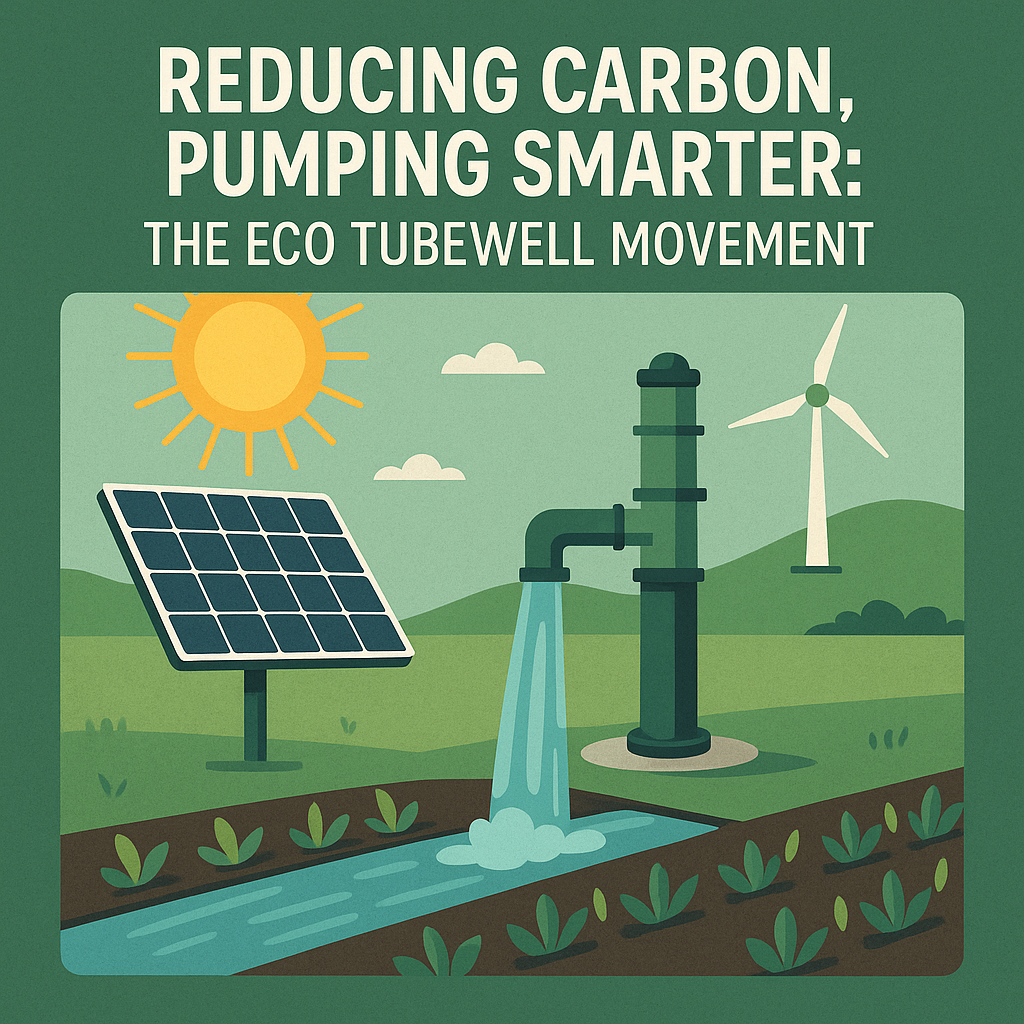
Reducing Carbon, Pumping Smarter: The Eco Tubewell Movement
Reducing Carbon, Pumping Smarter: The Eco Tubewell Movement
Introduction
In the face of climate change, water scarcity, and unsustainable farming practices, the need for environmentally responsible solutions is more urgent than ever. One of the most promising innovations in this domain is the rise of eco-friendly tubewell units. These systems aim to provide sustainable access to groundwater while reducing carbon emissions and enhancing energy efficiency. This blog delves deep into the eco tubewell movement, its benefits, technologies, challenges, and the role it plays in creating a greener future.
Chapter 1: Understanding the Eco Tubewell Concept
1.1 What is a Tubewell?
A tubewell is a type of water well where a long pipe is bored into an underground aquifer to extract groundwater, primarily used for irrigation, drinking water, and industrial processes.
1.2 Traditional vs. Eco-Friendly Tubewells
Traditional tubewells typically run on diesel or electricity sourced from fossil fuels, leading to high carbon emissions. Eco-friendly tubewells, on the other hand, incorporate sustainable power sources such as solar, wind, or hybrid energy systems, significantly lowering the carbon footprint.
1.3 Why Transition to Eco Tubewells?
Reduce greenhouse gas emissions
Decrease operational costs over time
Promote sustainable agriculture
Improve groundwater management
Reduce dependency on unreliable power sources
Chapter 2: Key Technologies Behind Eco Tubewell Units
2.1 Solar-Powered Tubewells
Components: Solar panels, pump controller, water pump, storage tanks.
Advantages: Zero fuel cost, low maintenance, scalability.
Use Case: Widely adopted in India, Pakistan, and Sub-Saharan Africa.
2.2 Wind-Driven Tubewells
Ideal for windy regions.
Often used in tandem with solar panels for hybrid systems.
Lower carbon footprint than grid-connected pumps.
2.3 Smart Water Pumping Systems
Equipped with IoT devices for real-time monitoring.
Automatically adjust flow rates and shut-off during overuse or system failures.
2.4 Drip Irrigation Integration
Precision watering system reduces water wastage.
Ideal for arid regions.
Enhances the efficiency of tubewell output.
Chapter 3: Environmental and Economic Benefits
3.1 Environmental Benefits
Lower carbon emissions
Conservation of groundwater through regulated usage
Reduced soil erosion and waterlogging
Enhanced biodiversity
3.2 Economic Benefits
Long-term savings on diesel and electricity
Lower maintenance and operational costs
Government subsidies and incentives in many countries
Improved crop yield through efficient irrigation
Chapter 4: Case Studies
** India’s Solar Pump Initiative (PM-KUSUM)**
Target: 3.5 million farmers
Impact: Reduced electricity load on rural grids
Outcome: Sustainable livelihoods and improved energy access
Chapter 5: Challenges in Adoption
5.1 High Initial Investment
Although costs are falling, initial capital can be a barrier.
5.2 Lack of Awareness and Training
Many farmers are unaware of the long-term benefits.
5.3 Policy and Infrastructure Gaps
Need for clearer government policies and incentives.
5.4 Maintenance and Technical Support
Inadequate local support for technical issues.
Chapter 6: Policy and Government Support
6.1 Global Support Programs
UNDP’s small grants programs
FAO’s sustainable agriculture initiatives
6.2 Role of NGOs and Private Sector
NGOs offer training, micro-financing, and support
Private sector innovation in pump technology
Chapter 7: The Road Ahead
7.1 Technology Innovation
Integration with AI for smart irrigation
Affordable battery storage systems
7.2 Public-Private Partnerships
Co-investments to scale solutions
Collaboration for training and outreach
7.3 Community Participation
Farmer cooperatives for shared usage
Women-led water user associations
7.4 Monitoring and Accountability
Mobile apps for usage tracking
Satellite monitoring of groundwater levels
Frequently Asked Questions (FAQs)
Q1: Are solar-powered tubewells reliable during cloudy weather?
A: Most modern systems are paired with battery backups or hybrid setups (solar + grid or diesel), ensuring consistent performance.
Q2: How much does an eco tubewell system cost?
A: The cost varies by region, depth, and size. A basic solar pump system ranges between $2,000–$5,000 but is eligible for subsidies in many countries.
Q3: Can eco tubewells be used for community drinking water?
A: Absolutely. With proper filtration systems, they can provide safe drinking water for rural populations.
Q4: Is maintenance a problem for these systems?
A: Solar systems require minimal maintenance, usually limited to panel cleaning and occasional part replacements.
Q5: What’s the payback period for investing in an eco tubewell?
A: Typically, 3–5 years depending on usage, subsidies, and local energy prices.
Conclusion
Eco-friendly tubewell units are more than a trend; they represent a crucial shift toward sustainable water management and agricultural resilience. As governments, farmers, and innovators continue to push boundaries, the eco tubewell movement holds the promise of a cleaner, greener, and more equitable future. It’s time to pump smarter, reduce carbon, and embrace a revolution beneath our feet.
Search
Categories
Tags
Latest Article