

Donate

Donate Tree or Seeds or E-waste
Our Company Address
Green Future Foundation
123 Nature Avenue,
Eco City, Green State 123456,
India
Email: contact@greenfuture.org
Phone: +91 9876543210
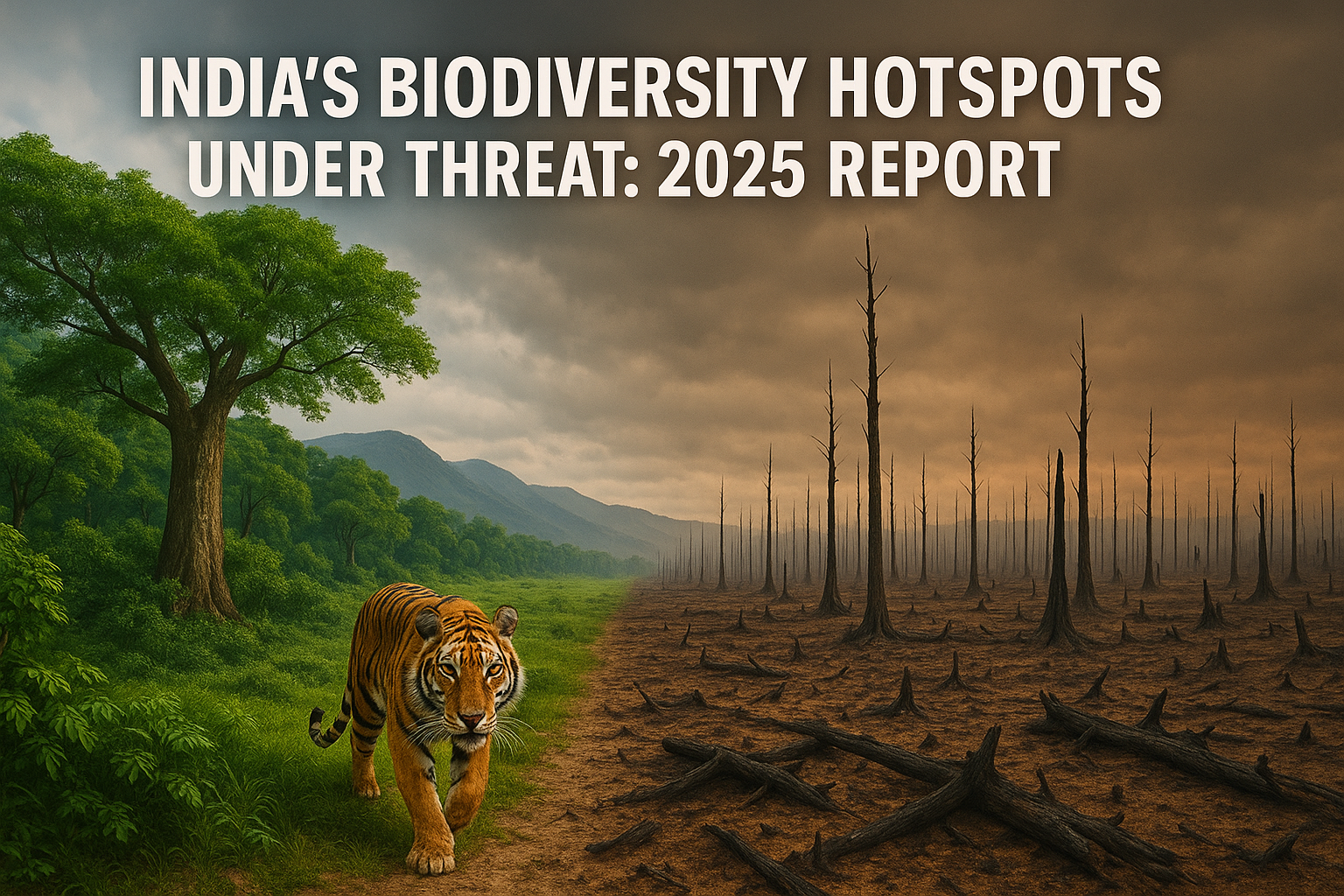
India’s Biodiversity Hotspots Under Threat: 2025 Report
1. 🔹 Introduction
Definition: Biodiversity hotspot kya hota hai aur kyun ranking me India top biodivers country hai
WHO India hotspots: Himalayas, Western Ghats, Indo‑Burma, Sundaland
Global importance: India covers 2.4% earth’s land, waha 8% global biodiversity hai
Blog scope: Current threats, region-wise case study, conservation measures, trends for 2025
2. 🌍 Hotspot Overview
2.1 Himalayas
Unique species: Snow leopard, red panda, Himalayan tahr, endemic flora
Key threats:
Deforestation, habitat fragmentation (roads, hydro projects)
Climate change (glacial retreat, rainfall pattern shifts)
Poaching for wildlife parts
2.2 Western Ghats
Biodiversity richness: 30% India’s flora-fauna, 7,400 species of flowering plants, 1,273 endemic species
Threats:
Plantation agriculture, deforestation >40% loss
Invasive species (Lantana)
Warming reducing NPP despite greening
2.3 Indo‑Burma Region
Hotspot coverage: NE India, Andaman Islands, Myanmar, etc.
Threats:
Habitat loss from urban/agri expansion
Pollution: pesticides, industrial effluents
Invasive water hyacinth choking freshwater
2.4 Sundaland (Andaman & Nicobar, Sunderbans)
Mangrove importance: Largest mangrove forest with Bengal tigers, coastal buffer, carbon sink
Threats:
Mangrove loss due to aquaculture, coastal development
Climate rise, sea level, salinity change
Cyclone impacts on island species
3. 🚨 2025 Key Threat Drivers
1. Climate Change: Hotspots me temp rise up to 33% biodiversity loss by 2050
2. Habitat destruction & fragmentation: Infrastructure, mining, dams—e.g., Vagamon Hills, Aravallis
3. Invasive species: Lantana, Prosopis, water hyacinth
4. Pollution: River plastics, chemical runoff affecting aquatic life
5. Poaching & illegal wildlife trade: Rhinos, turtles, bustards
6. Urban development pressure: Basai Wetland, Delhi Ridge, Bangalore’s wetlands
4. 📌 Region-Wise Case Studies & Stats
Nilgiris (Western Ghats): Agroforestry restores native forests
Vagamon Hills (Kerala): Tourism destroying 137 angiosperm spp., threats from construction
Jokai Botanical Garden (Assam): Neglect threatens orchids, medicinal plants, rescued by locals
Delhi Ridge & Basai Wetland: Urban encroachment harming green lungs
5. 🌱 Conservation Measures & 2025 Initiatives
Governmental Actions:
**₹450 cr** allocated for Integrated Wildlife Habitats; ₹290 cr for Tiger & Elephant projects
Aravalli Green Wall project, "Ek Ped Maa Ke Naam" campaign launched June 2025
Mangrove scheme MISHTI expanded Gujarat’s mangrove cover by 19,020 ha
NGO & Community Initiatives:
AI‑driven wildlife monitoring, anti‑poaching tech
Local agroforestry in Nilgiris
Turtle rescue and wetland preservation
6. 🌍 Global Targets & India’s Alignment
30×30 UN Biodiversity Framework: India pushing for restoring 30% land/sea by 2030
IPCC warnings: Up to 33% loss in hotspots by 2050
PLOS Biology study: Protected areas alone insufficient—needs landscape approach
7. 🔮 Emerging Trends for 2025
Rise in AI-based conservation tools for real-time monitoring
Expansion of community-led restoration in hotspots like Western Ghats
Climate resilience planning for hotspots facing warming stress
Strategic targeting of invasive species eradication, ecosystem restoration
8. ✅ Conclusion & Call to Action
Recap India’s hotspots & threats
Highlight conservation investments and tech-based solutions
Encourage citizen involvement: tree-planting, volunteer programs, support eco-tourism
SEO CTA: “Learn how you can help preserve India’s biodiversity hotspot today”
Q1: India ke biodiversity hotspots kaunsa hain?
A: Himalayas, Western Ghats, Indo‑Burma region, aur Sundaland (Andaman & Nicobar) — ye chaar global hotspots hain .
Q2: 2025 me India ke biodiversity hotspots par kya main threats hain?
A: Habitat destruction, climate change, invasive species, pollution, poaching, urban sprawl — ye sab major drivers hain .
Q3: IPCC ne India ke hotspots par kya warn kiya hai?
A: IPCC ke 2025 report me kaha gaya ki Western Ghats me 2050 tak biodiversity ka 33 % kum ho sakta hai agar climate adaptation programs na hon .
Q4: Mangrove loss ka samarath kya hai aur government kya kar rahi hai?
A: Mangrove ki katoti: aquaculture aur coastal development se; Gujarat me MISHTI scheme se 19,020 ha mangroves wapas lage .
Q5: AI wildlife conservation kaise help kar raha hai?
A: AI cameras & models poaching detect karte hain, wildlife ko classify karte hain — real time data se enforcement behtar hoti hai .
Search
Categories
Tags
Latest Article