


Donate

Donate Tree or Seeds or E-waste
Our Company Address
Green Future Foundation
123 Nature Avenue,
Eco City, Green State 123456,
India
Email: contact@greenfuture.org
Phone: +91 9876543210
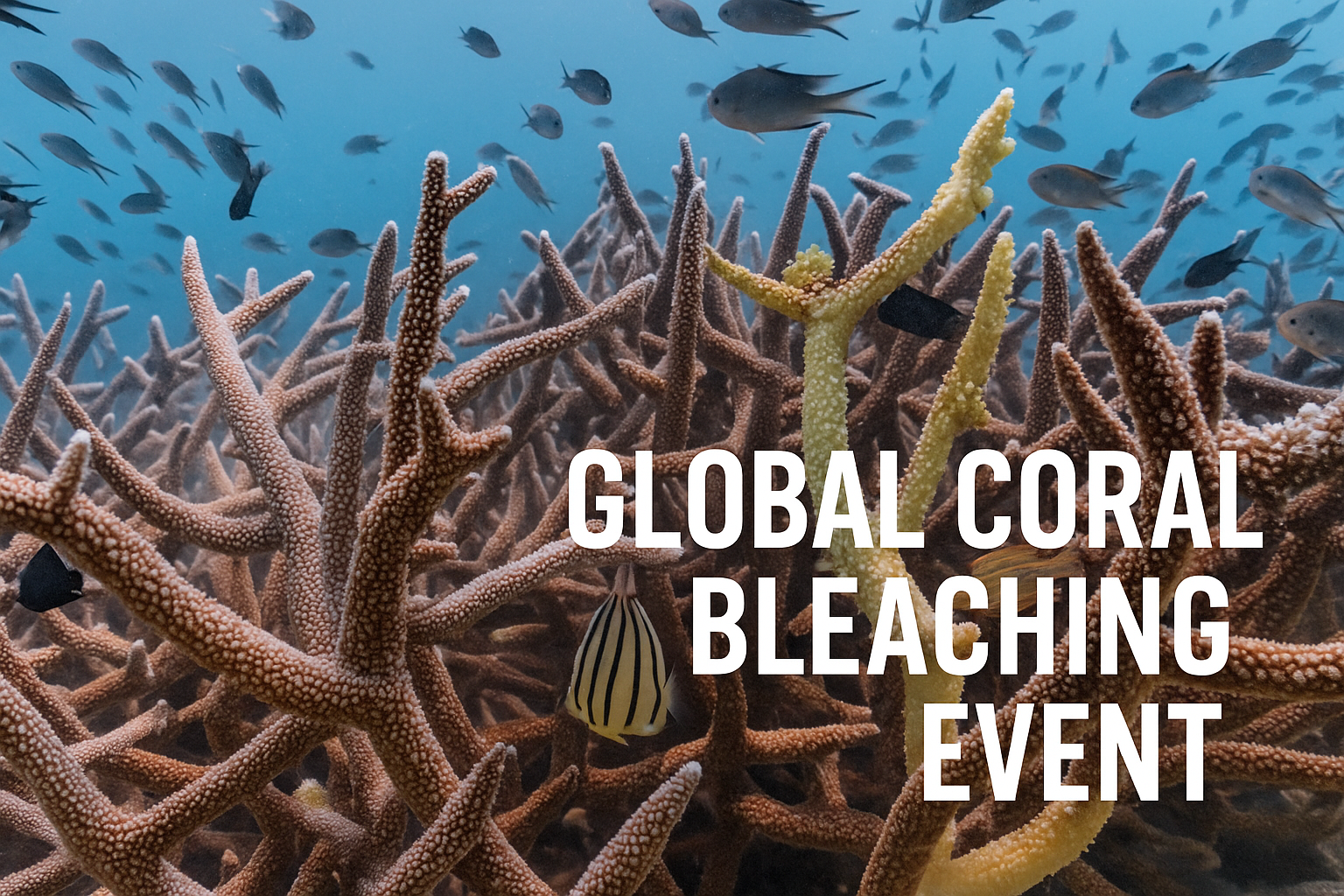
Global Coral Bleaching Event
The world is currently experiencing the most extensive coral bleaching event ever recorded, marking the fourth global bleaching event since monitoring began. This crisis, which commenced in early 2023, has impacted approximately 84% of the planet’s coral reefs across at least 83 countries and territories .
🌊 What Is Coral Bleaching?
Coral bleaching transpires when prolonged exposure to elevated sea temperatures causes corals to expel the symbiotic algae (zooxanthellae) that provide them with energy and vibrant coloration. Without these algae, corals turn white and become more susceptible to disease and mortality. If stressful conditions persist, widespread coral death can ensue .
🔥 Causes and Contributing Factors
The primary driver of this bleaching event is anthropogenic climate change, leading to unprecedented ocean heat levels. In 2024, global sea surface temperatures reached a record average of 20.87°C (69.57°F) . The El Niño climate pattern further exacerbated the situation, intensifying marine heatwaves and accelerating coral stress .
🗺️ Global Impact
This bleaching event has affected coral reefs across all major ocean basins:
Pacific Ocean: Including Australia's Great Barrier Reef, where consecutive bleaching events have been recorded .
Atlantic Ocean: Encompassing the Caribbean and parts of the U.S. coastline .
Indian Ocean: Impacting regions such as the Red Sea and the Persian Gulf .
🧪 Scientific and Conservation Efforts
In response to this crisis, scientists are intensifying efforts to understand and mitigate coral bleaching:
Genetic Research: Projects like the Aquatic Symbiosis Genomics initiative aim to develop "super-corals" with enhanced thermal tolerance through advanced DNA sequencing and selective breeding .
Restoration Initiatives: Conservation groups are actively transplanting lab-raised corals into affected areas, such as the Florida Keys, to help restore degraded reef systems .
⚠️ Future Outlook
The frequency and severity of coral bleaching events have escalated since the 1980s, correlating with rising global temperatures. Without significant reductions in greenhouse gas emissions, scientists warn that coral reefs could face functional extinction by 2100 .
Coral reefs are vital ecosystems that support marine biodiversity, protect coastlines, and sustain fisheries and tourism industries. Addressing climate change is imperative to preserve these critical habitats for future generations.
Here are frequently asked questions (FAQs) related to the global coral bleaching event currently affecting reefs worldwide:
---
❓ What is coral bleaching?
Answer:
Coral bleaching occurs when corals, stressed by environmental changes (especially heat), expel the symbiotic algae (zooxanthellae) that live in their tissues. These algae give corals their color and provide them with most of their energy. Without them, corals turn white ("bleached") and are more vulnerable to disease and death.
---
❓ What causes coral bleaching?
Answer:
The main cause is elevated sea surface temperatures, often due to:
Climate change and global warming
Marine heatwaves
El Niño events Secondary stressors include:
Ocean acidification
Pollution
Overexposure to sunlight
Sedimentation
---
❓ Why is the current bleaching event so severe?
Answer:
This is the largest coral bleaching event on record, affecting ~84% of the world's reefs. It is primarily due to record-breaking ocean temperatures in 2023–2025, driven by:
Human-induced climate change
A strong El Niño
Cumulative warming over previous decades
---
❓ Which areas are most affected?
Answer:
Major affected regions include:
Great Barrier Reef (Australia)
Caribbean Sea
Red Sea
Pacific Islands
Southeast Asia
Florida Keys (USA)
Virtually every ocean basin with coral reefs has been impacted.
---
❓ Can bleached corals recover?
Answer:
Yes, but only if conditions return to normal quickly. Corals may regain their algae and recover. However, prolonged stress or repeated bleaching greatly reduces the chance of recovery and increases coral mortality.
---
❓ What are the ecological impacts?
Answer:
Loss of biodiversity (reefs support 25% of marine species)
Declines in fisheries and coastal food security
Reduced coastal protection from storms and erosion
Collapse of tourism industries in reef-dependent areas
---
❓ What is being done to combat coral bleaching?
Answer:
Efforts include:
Reducing carbon emissions to slow ocean warming
Coral restoration projects (e.g., coral nurseries, transplantation)
Breeding heat-resistant “super corals”
Marine Protected Areas (MPAs) to reduce local stressors
---
❓ Can humans reverse coral bleaching?
Answer:
We cannot reverse bleaching once it occurs, but we can reduce future events by:
Limiting global warming through climate action
Improving water quality
Sustainably managing fisheries and tourism
Supporting reef conservation initiatives
Search
Categories
Tags
Latest Article