

Donate
Donate Tree or Seeds or E-waste
Our Company Address
Green Future Foundation
123 Nature Avenue,
Eco City, Green State 123456,
India
Email: contact@greenfuture.org
Phone: +91 9876543210
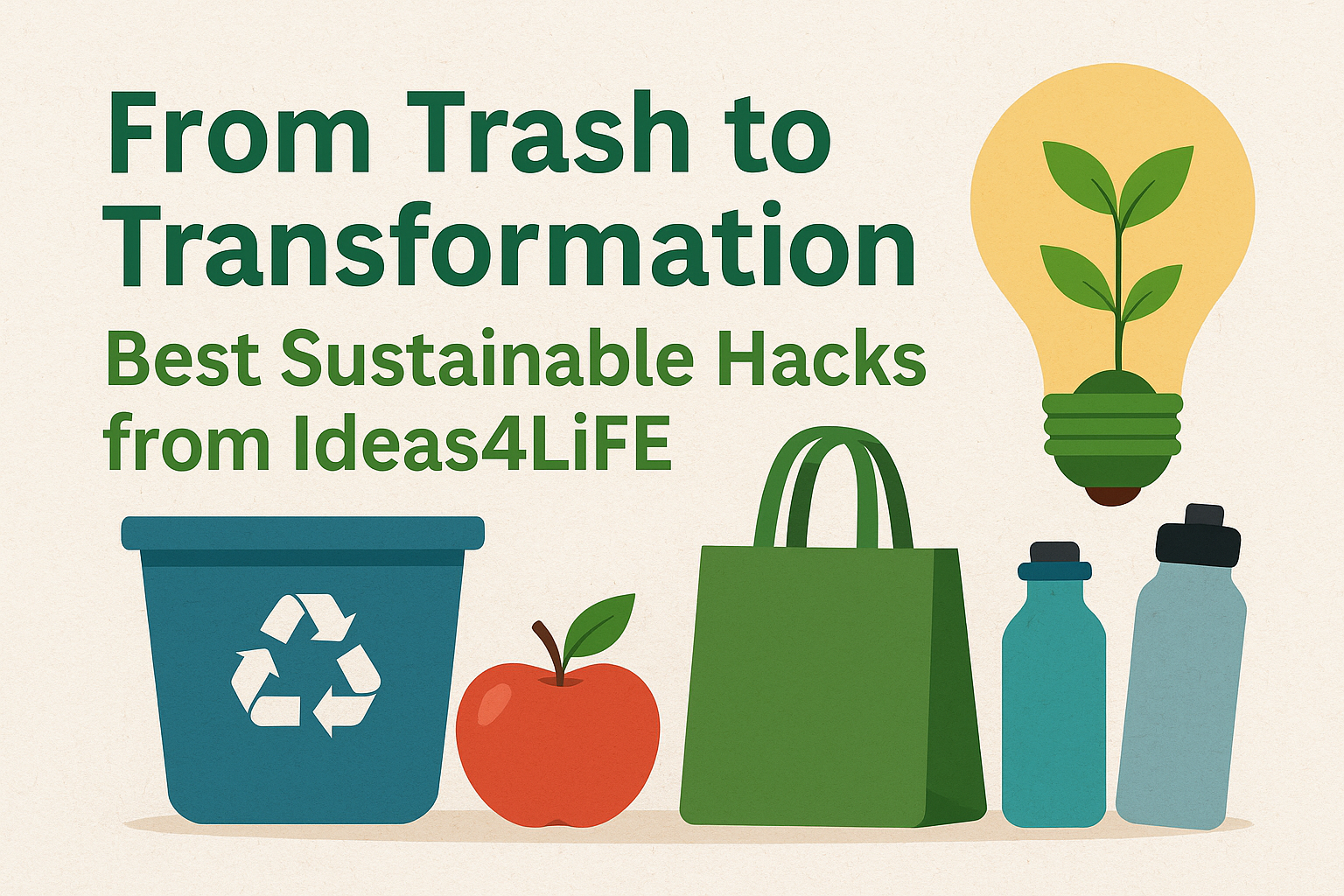
From Trash to Transformation: Best Sustainable Hacks from Ideas4LiFE
Blog Title: From Trash to Transformation: Best Sustainable Hacks from Ideas4LiFE
---
Introduction
India, with its vast population and rising environmental challenges, has recognized the urgency of climate-conscious living. In response, the Government of India launched the innovative Mission LiFE (Lifestyle for Environment), spearheaded by the Ministry of Environment, Forest and Climate Change (MoEFCC). At the heart of this mission lies the platform "Ideas4LiFE," a vibrant hub that collects and showcases citizen-driven sustainable practices. The portal emphasizes behavioral change, grassroots solutions, and eco-friendly innovations.
In this blog, we explore the most impactful and practical sustainable "hacks" that have emerged from the Ideas4LiFE initiative. These ideas not only help reduce your ecological footprint but also align with India's climate action goals.
---
Chapter 1: What Is Ideas4LiFE?
Ideas4LiFE is more than a government portal. It is a participatory ecosystem inviting Indian citizens, NGOs, businesses, and institutions to submit innovative ideas that promote sustainability. This crowdsourced approach focuses on:
Waste reduction
Water conservation
Energy efficiency
Eco-alternatives to single-use plastics
Sustainable food habits
E-waste management
Each idea is reviewed and shared publicly, creating a growing library of practical tips. Selected entries are also showcased in national campaigns or adopted by local governance bodies.
---
Chapter 2: Why Sustainable Hacks Matter in 2025
India is among the countries most vulnerable to climate change. Rising temperatures, erratic monsoons, and pollution threaten ecosystems and human health. Individual lifestyle changes can collectively mitigate these effects.
As per a UN Environment Programme report, behavioral shifts can cut greenhouse gas emissions by 20%. Simple actions—like switching to metal straws or composting food waste—scale up when adopted widely. The hacks featured on Ideas4LiFE offer scalable, low-cost interventions that align with the Paris Agreement goals and India’s Net Zero 2070 target.
---
Chapter 3: Top 10 Sustainable Hacks from Ideas4LiFE
1. The 3-Bin Smart Segregation System
Developed by students in Pune, this hack involves color-coded bins with QR labels that guide users on how to segregate waste. The system is linked to local composting centers and recyclers.
2. Reusable Cloth Sanitary Pads Drive
Rural innovators in Tamil Nadu launched a campaign producing cloth-based sanitary napkins. It's sustainable, cost-effective, and supports menstrual hygiene.
3. Bamboo Toothbrush Campaign
Citizens from Assam initiated mass distribution and education drives about bamboo toothbrushes—biodegradable and locally sourced.
4. Solar Stove Challenge
College teams from Rajasthan submitted DIY solar cooker designs under Rs. 500, helping reduce LPG dependency.
5. Zero-Waste Festival Kits
Eco-clubs designed kits containing seed paper plates, edible spoons, and coconut-leaf decorations for use in weddings and religious festivals.
6. Plastic Bank Wallet App
A startup in Mumbai built an app that rewards users who deposit single-use plastics at collection kiosks.
7. Rainwater Harvesting in Urban Slums
Using discarded plastic drums, youth groups in Delhi created affordable rooftop rainwater systems.
8. E-Waste Awareness Comics
Schoolchildren in Hyderabad published a comic series educating peers on recycling old gadgets.
9. Home Biogas Digesters
A farmer cooperative in Bihar converted cow dung into cooking fuel using homemade digesters.
10. ‘Eco-Kitchen’ Movement
Housewives in Gujarat started meal prep groups using solar cookers, waste-free packaging, and zero leftover challenges.
---
Chapter 4: How You Can Participate
Want to contribute to India’s sustainability journey? Here’s how:
Submit your idea on ideas4life.mygov.in
Share successful sustainable practices from your household, school, or community
Volunteer to pilot a hack in your locality
Follow and promote #MissionLiFE and #Ideas4LiFE on social media
MoEFCC recognizes top contributors annually, and many are invited to showcase their projects at national green expos and innovation summits.
---
Chapter 5: Trendy Questions and Expert Answers
Q1: What’s the easiest way to start living sustainably?
A: Start small—carry your own bag, refuse plastic straws, and compost food scraps. These micro-habits build lasting eco-conscious behavior.
Q2: How can students contribute to Ideas4LiFE?
A: Students can launch eco-club campaigns, conduct waste audits, or build prototypes. Many top entries on the portal come from school and college groups.
Q3: Is Mission LiFE only for urban areas?
A: No. In fact, many innovations come from rural communities. Mission LiFE promotes both high-tech and low-cost grassroots ideas.
Q4: How do I know if my idea is impactful?
A: Think of scale, replicability, and impact. If your idea can save resources or reduce pollution and can be adopted by others, it has high value.
Q5: Can businesses participate?
A: Absolutely. Startups and MSMEs are encouraged to submit eco-products, CSR campaigns, and circular economy solutions.
---
Conclusion
The Ideas4LiFE portal proves that climate action is no longer confined to conference rooms—it lives in kitchens, classrooms, rooftops, and smartphones. Whether you're a student, homemaker, engineer, or entrepreneur, your idea can spark real transformation.
From trash to transformation, India’s environmental future is being rewritten by everyday heroes—one bamboo brush, one compost bin, one festival kit at a time.
Join the movement. Share your idea. Shape the change.
#MissionLiFE #Ideas4LiFE #GreenIndia #EcoInnovation #SustainableIndia2025
Search
Categories
Tags
Latest Article