

Donate

Donate Tree or Seeds or E-waste
Our Company Address
Green Future Foundation
123 Nature Avenue,
Eco City, Green State 123456,
India
Email: contact@greenfuture.org
Phone: +91 9876543210
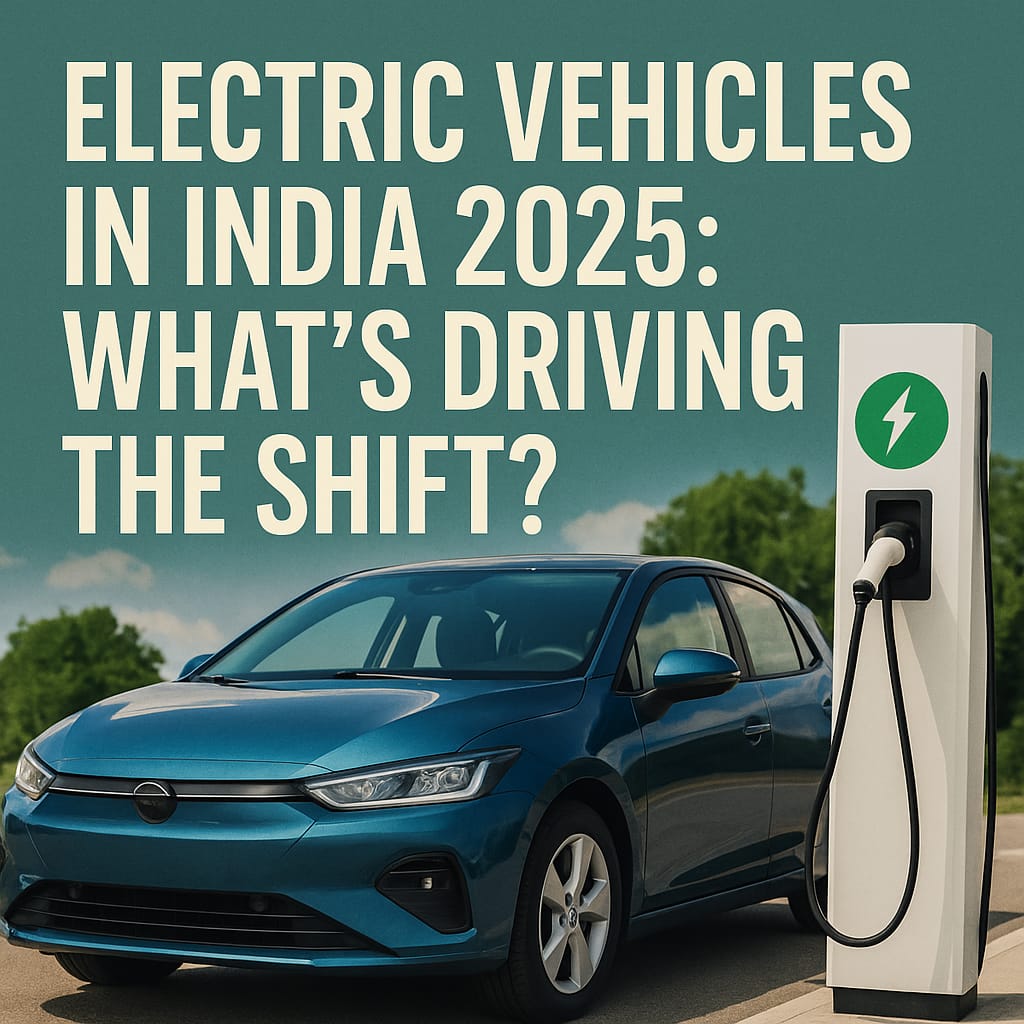
Electric Vehicles in India 2025: What’s Driving the Shift?
### Electric Vehicles in India 2025: What’s Driving the Shift?
India is witnessing a major transformation in the automotive sector. The year 2025 stands as a critical juncture where electric vehicles (EVs) are not just an alternative but are fast becoming the mainstream. With government policies, technological advancements, and changing consumer behavior converging, the EV revolution in India is gaining unprecedented momentum. This blog explores in detail the factors driving this shift, the key players, challenges, and what the future holds.
---
## Chapter 1: The Background - Why EVs Matter
India, the world's third-largest emitter of carbon dioxide, is under significant pressure to reduce greenhouse gas emissions. The transportation sector contributes nearly 10% of these emissions, prompting urgent action. Electric Vehicles offer a cleaner, more sustainable alternative to internal combustion engine (ICE) vehicles. In a country battling pollution in metropolitan cities, EVs emerge as a vital solution.
### Key Stats:
* As of 2024, over 3 million EVs are registered in India.
* By 2030, the government aims to achieve 30% electrification of the vehicle fleet.
---
## Chapter 2: Government Policies Driving the Change
### FAME I and II
The Faster Adoption and Manufacturing of Hybrid and Electric Vehicles (FAME) scheme was a cornerstone policy. FAME II, launched in 2019, allocated Rs. 10,000 crore for subsidies and infrastructure development.
### State EV Policies
Several states like Delhi, Maharashtra, and Tamil Nadu have their own EV policies offering benefits like registration fee waivers, road tax exemptions, and subsidies on charging infrastructure.
### PLI Schemes
Production-Linked Incentive schemes for Advanced Chemistry Cell (ACC) battery manufacturing and automotive components have attracted investments from global giants.
---
## Chapter 3: Technological Advancements
### Battery Innovations
Lithium-ion batteries dominate the market, but solid-state and sodium-ion batteries are being tested. Battery Swapping is gaining traction for two- and three-wheelers.
### Charging Infrastructure
From 500 public charging stations in 2020 to over 10,000 in 2024, India has seen exponential growth. Smart charging and fast-charging technologies are now standard.
### Local Manufacturing
Make-in-India initiatives have spurred local manufacturing of EV components, reducing dependency on imports.
---
## Chapter 4: Rise of EV Startups and OEMs
### Key Players
* **Tata Motors**: Leading the 4-wheeler EV segment with Nexon EV and Tigor EV.
* **Ola Electric**: Dominant in electric scooters with its S1 series.
* **Ather Energy**: Known for tech-savvy electric two-wheelers.
* **Mahindra Electric**: Focused on 3-wheelers and small commercial EVs.
* **BYD, Hyundai, MG Motor**: Global players making significant investments.
### Startup Ecosystem
Over 500 EV startups have emerged in India, offering everything from EV design to charging infrastructure and battery tech.
---
## Chapter 5: Consumer Trends
### Cost of Ownership
EVs offer lower running costs compared to petrol/diesel vehicles. Maintenance is also cheaper due to fewer moving parts.
### Growing Awareness
Environmental consciousness, coupled with rising fuel prices, is pushing consumers towards EVs.
### Urban vs Rural Adoption
Urban areas are leading the adoption curve, but rural penetration is expected to grow with affordable EV models and better infrastructure.
---
## Chapter 6: Challenges Ahead
### Infrastructure Gaps
Though improving, many regions lack adequate charging infrastructure.
### High Initial Costs
Despite subsidies, EVs have a higher upfront cost, especially in the 4-wheeler segment.
### Battery Recycling
The industry must address the recycling of lithium-ion batteries to ensure long-term sustainability.
### Grid Load
A sudden surge in EV charging could stress India's power grid if not managed smartly.
---
## Chapter 7: The Road to 2025 and Beyond
India is likely to see exponential growth in EV adoption by 2025. Key drivers will be:
* Improved battery tech and affordability
* Government and private sector collaboration
* Urban planning focused on green mobility
**Future Outlook:**
* Expected EV penetration: 15-20% in personal vehicles, 40% in public transport, 70% in 2- and 3-wheelers by 2030.
* Rise in solar-powered and hybrid charging stations
* Emergence of EV-only ride-hailing services
---
## Trendy Q\&A on EVs in India
**Q1: Are EVs really cheaper in the long run?**
A1: Yes. Despite higher initial costs, EVs save money on fuel and maintenance over time.
**Q2: What happens if my EV runs out of battery mid-way?**
A2: Fast-charging stations and portable battery solutions are expanding to cover this concern.
**Q3: Which EV is best under Rs. 10 lakhs?**
A3: Tata Tiago EV, MG Comet EV, and Citroen eC3 are good choices in this segment.
**Q4: Are EVs safe in Indian weather conditions?**
A4: Modern EVs are tested for Indian road and weather conditions and meet safety standards.
**Q5: What is Battery Swapping?**
A5: It allows users to replace a drained battery with a fully charged one at designated stations, reducing downtime.
---
## Conclusion
The EV landscape in India is evolving rapidly. With the combined push from policy, industry, and consumers, 2025 is poised to be a watershed year. The road ahead is electrified and full of opportunities, making it a thrilling time for the automotive industry and Indian mobility.
Stay tuned, stay charged!
Search
Categories
Tags
Latest Article